

0Before day one
Apply
A high school diploma or GED. Usually an aptitude test and an interview.
BLS, Occupational Outlook: ElectriciansElectrical trade
Earn while you learn. Build a licensed, in-demand career.
Lesson 1 is free, no account needed.
Where you are
ApplyBefore day one
—pay starts on day one
The shape of it
A job and a school at once. You work for a contractor, get paid for every hour, and go to class once a week. At the end, the license exam.
0Before day one
A high school diploma or GED. Usually an aptitude test and an interview.
BLS, Occupational Outlook: Electricians
1Years 1 to 4 or 5
About 2,000 paid hours a year on the job, plus class. A five-year union program: 8,000 hours on the job, 900 in class.

2Licensed
Licensed to work unsupervised. Median pay: $63,190 a year, $30.38 an hour.
BLS, May 2025
3The rest of a career
Foreman, master electrician, your own company. More hours, another exam.
Pay
Apprentice pay starts as a share of journeyman pay and rises as you log hours and pass each year of school. No tuition debt at the end.
Apprentice pay, step by step · one published scale
Six pay periods, each after 1,000 to 1,500 hours and a year of school; rates differ by local and state. Dashed line: national median for all electricians. IBEW Local 26, June 2026 · BLS, May 2025
Four ways in
Who runs the program decides how you apply.
01Union
Run by the IBEW and NECA through local training centers. You apply to the center, take an aptitude test, interview, and wait on a ranked list.

02Merit shop
Run by contractor associations for non-union companies. Often you are hired by a member contractor first, then enrolled in classes.
03Employer
A contractor registers its own program with the U.S. Department of Labor or a state agency: a paid job with a mentor, structured training, classes and a credential.
04Pre-apprenticeship
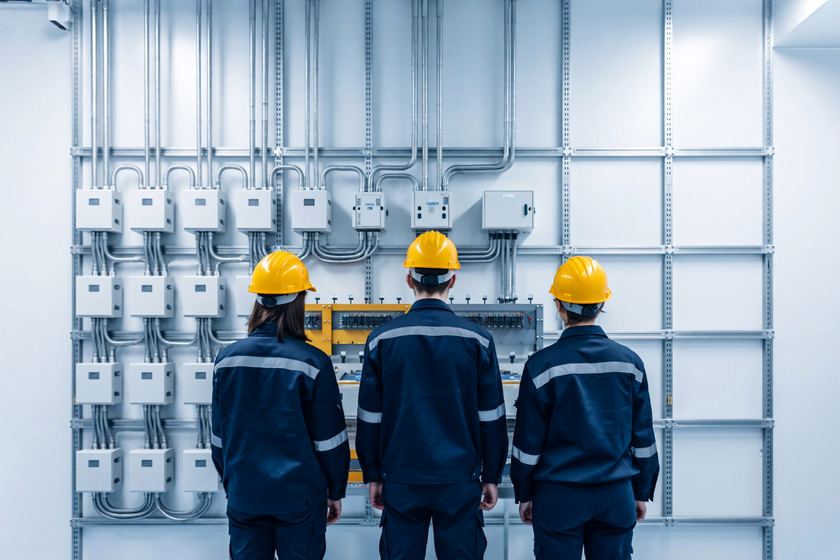
Programs that get you ready for a Registered Apprenticeship. High schools, career centers and community groups run them, sometimes with a direct route into a sponsor’s program.
Where we stand: Triunctio is preparation. We are not a union, a training center or a state-recognized pre-apprenticeship, and programs still decide who they accept.
Four words
Paid trainee under a licensed electrician.
Finished and passed the exam. Works on their own.
More years, a harder exam. Can pull permits and run a shop in most states.
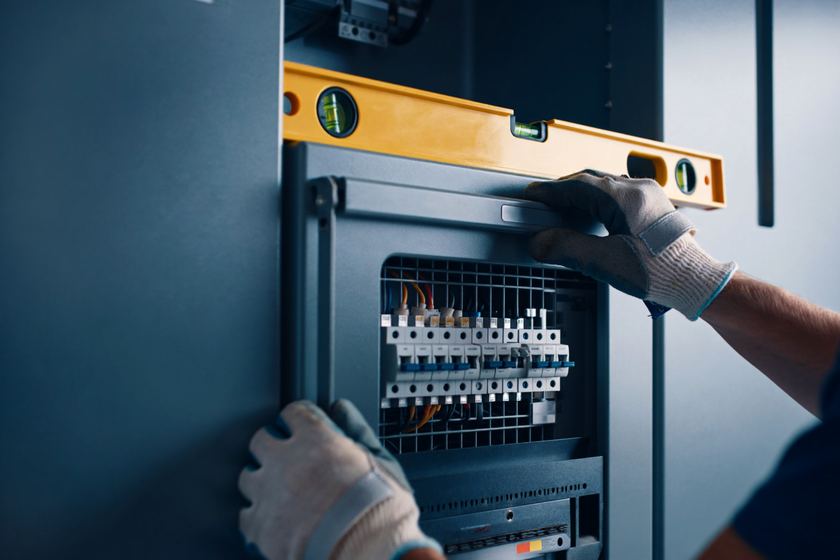
Your state says you may do the work. Rules differ by state.
Numbers: BLS Occupational Outlook Handbook, Electricians (May 2025) and IBEW Local 26, Inside Wireman program. Read October 2026.
No. The course starts at the beginning, from jobsite safety to reading electrical drawings. Apprenticeship programs usually ask for a high school diploma or GED when you apply to them, not to us.
Young people, mostly 16 to 20, who want into the electrical trade, and the electrical contractors who hire apprentices.
What the electrical trade asks of you in your first year: jobsite safety, the tools, reading electrical drawings, and how a day on site runs. Contractors tell us the top reason new hires leave early is that the work isn't what they expected, so the lessons are built around that year.
No. Triunctio is not a recruiter, and nobody can promise you an apprenticeship. We help you get ready. Contractors and programs decide who they hire.